Marine Equipment & Systems

Liquid Cargo Insulation Materials

Insulation, moisture-control and installation materials for cryogenic or temperature-controlled liquid-cargo systems

Selected capability

Liquid Cargo Insulation Materials

Insulation, moisture-control and installation materials for cryogenic or temperature-controlled liquid-cargo systems

Liquid-cargo insulation is selected as a material system around cargo temperature, tank/piping structure, allowable heat ingress, condensation and moisture-control requirements. A package may include primary insulation, vapour/moisture barrier, protective layer, adhesives/sealants and installation procedures, subject to class and cargo-containment-system requirements.

01Reduce ambient heat ingress into cryogenic/temperature-controlled cargo systems
02Control condensation, moisture uptake and freeze–thaw degradation of insulation performance
03Provide primary materials, auxiliaries and installation procedure around actual interfaces for field quality control
Discuss this project
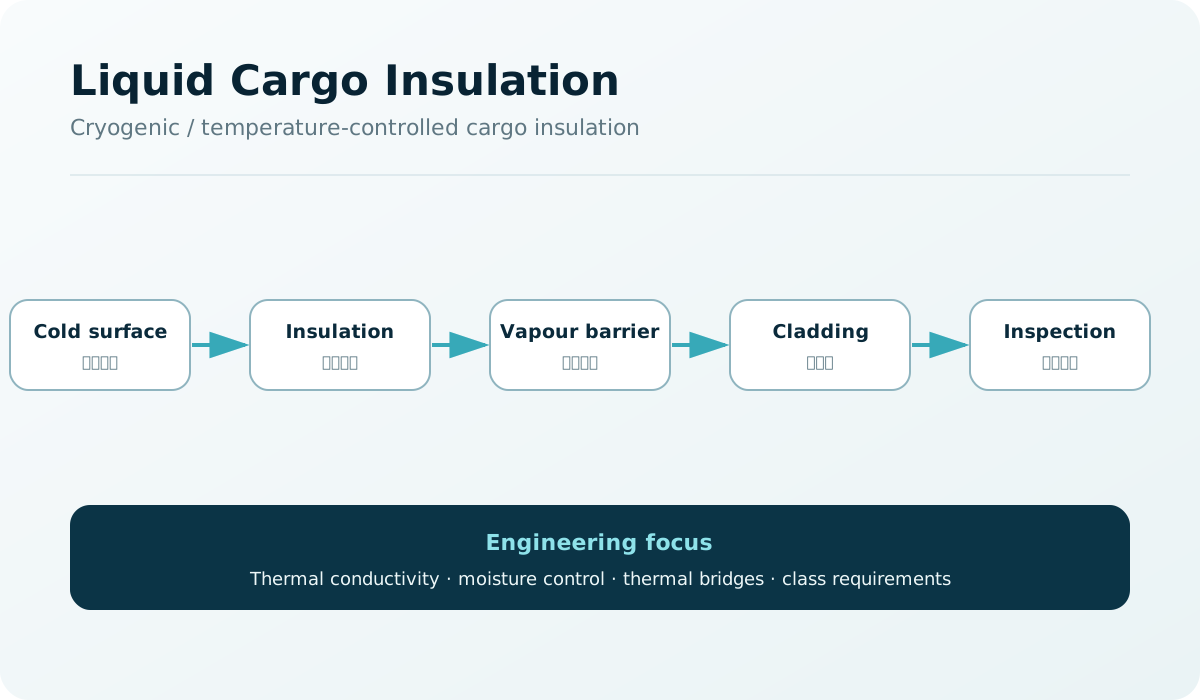
Liquid Cargo Insulation Materials schematic
Technical principle / system relationship
System relationship

Make the interfaces clear before equipment selection.

This flow is a quick view of the system boundary. Final quantities, interfaces and configuration remain vessel- and project-specific.

01Cold surface
02Insulation
03Vapour barrier
04Protection
05Inspection
01

Typical configuration & scope

  • Primary insulation and preformed parts
  • Vapour/moisture barrier and sealing materials
  • Protective cladding and fasteners
  • Adhesives, fillers and installation auxiliaries
02

Information required

  • Medium and design/minimum temperature
  • Tank/piping structure and required insulation thickness
  • Allowable heat ingress/thermal conductivity and moisture-control requirements
  • Fire, class, installation and inspection requirements
03

Engineering focus

  • Material performance must suit the actual temperature range and medium
  • Address thermal bridges and vapour paths at joints, penetrations and supports
  • Field workmanship, curing conditions and inspection method are as important as material properties
04

Standards & technical basis

  • Class / cargo-containment-system requirements as applicable
  • IMO IGC Code where applicable

Applicable rules, certificates and approval scope are confirmed against vessel class, flag and contract requirements.

From data to delivery

One delivery logic, with engineering depth adapted to each capability.

  1. 01Define duty & constraints
  2. 02Engineering / selection / interfaces
  3. 03Manufacturing / sourcing / approvals
  4. 04Installation / commissioning / verification
  5. 05Handover / lifecycle support