Engineering & Services

Marine Shore Power System

Provide safe and stable shore-to-ship power matched to the vessel electrical system

Selected capability

Marine Shore Power System

Provide safe and stable shore-to-ship power matched to the vessel electrical system

Can include shore-side frequency/voltage conversion, connection boxes and cable management plus ship-side receiving, synchronising/transfer, interlocks and PMS interfaces. Voltage, frequency, capacity, connector type, cable reach and synchronising philosophy must be defined early.

01Reduce auxiliary-generator running while alongside
02Use voltage/frequency conditioning and interlocks for reliable connection
03Configure HV or LV architecture to port and vessel requirements
Discuss this project
Marine Shore Power System
Equipment / engineering context
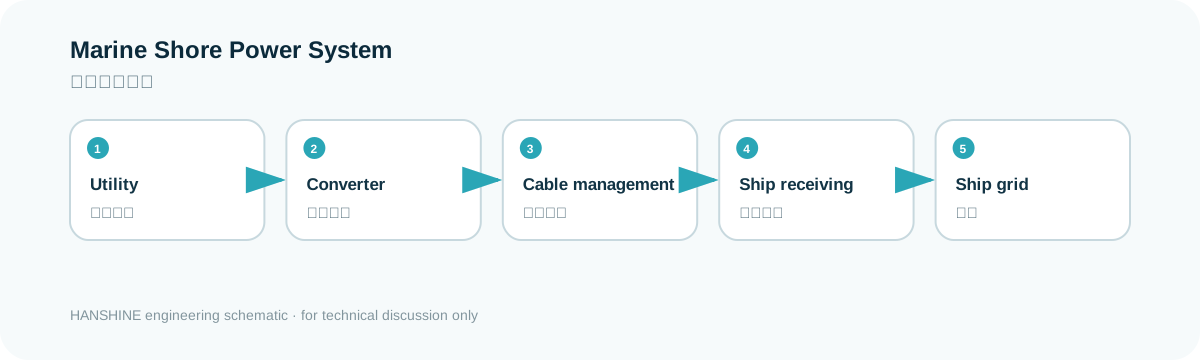
Marine Shore Power System schematic
Technical principle / system relationship
System relationship

Make the interfaces clear before equipment selection.

This flow is a quick view of the system boundary. Final quantities, interfaces and configuration remain vessel- and project-specific.

01Utility
02Converter
03Cable management
04Ship receiving
05Ship grid
01

Typical configuration & scope

  • Shore converter/transformer
  • Connection box, plugs and cable management
  • Ship receiving and synchronising/transfer panels
  • Protection, interlocks, metering and PMS/EMS interfaces
02

Information required

  • Shore/ship voltage, frequency, phase system and capacity
  • Alongside load and maximum demand
  • Connector standard and cable distance
  • Synchronised transfer or dead-bus changeover requirement
03

Engineering focus

  • Define system boundary through transformers, converters, cables and ship connection
  • Validate interlocks, earthing monitor, phase sequence and emergency stop as a package
  • Port works must account for traffic, cable route/trenches and operation method
04

Standards & technical basis

  • IEC/IEEE 80005 series
  • IEC 60309-5 for LV connection where applicable
  • Class / port requirements

Applicable rules, certificates and approval scope are confirmed against vessel class, flag and contract requirements.

Shore power at a glance

Power the vessel from shore while at berth — without running auxiliary generators.

Shore power — also known as OPS, AMP or cold ironing — supplies a berthed vessel from the port electrical grid. A complete system can include frequency and voltage conversion, distribution, protection, interlocking, cable management, ship-side receiving equipment and controlled transfer to the vessel switchboard.

Auxiliary generators reduced or stopped at berth 50/60 Hz and LV/HV project configurations Newbuild and retrofit integration Ship–shore control, protection and data coordination
System advantages

More than a power connection — a cleaner, safer and more flexible berth-power strategy.

The value of shore power comes from the complete ship–shore system: energy conversion, safe transfer, cable handling, automation, monitoring and lifecycle support all work together.

01

Cleaner, quieter berth operation

Reducing or stopping auxiliary generators cuts onboard fuel burning at berth, lowering local exhaust emissions, vibration and noise. Overall carbon benefit depends on the shore electricity mix.

02

Lower fuel use and auxiliary-engine hours

Where shore electricity is economically favourable, shore power can reduce berth fuel consumption while also reducing auxiliary-engine running hours and related maintenance demand.

03

Stable voltage and frequency

Static frequency conversion and transformer options match shore-grid power to the vessel requirement, supporting 50/60 Hz and project-specific LV or HV distribution.

04

Safer, smoother power transfer

Synchronising checks, interlocks, protection logic and automated transfer sequences can reduce the risk of interruption, incorrect operation and inrush during ship–shore changeover.

05

Flexible capacity and vessel compatibility

Modular converters, multiple feeders and flexible cable-management layouts can be configured for different vessel classes, berthing positions and high-power hotel or cargo-working loads.

06

Automated operation and remote visibility

PLC/HMI automation can support guided or one-touch operating sequences, remote status monitoring, alarms, energy data and optional cloud/edge analytics for lifecycle management.

Field engineering

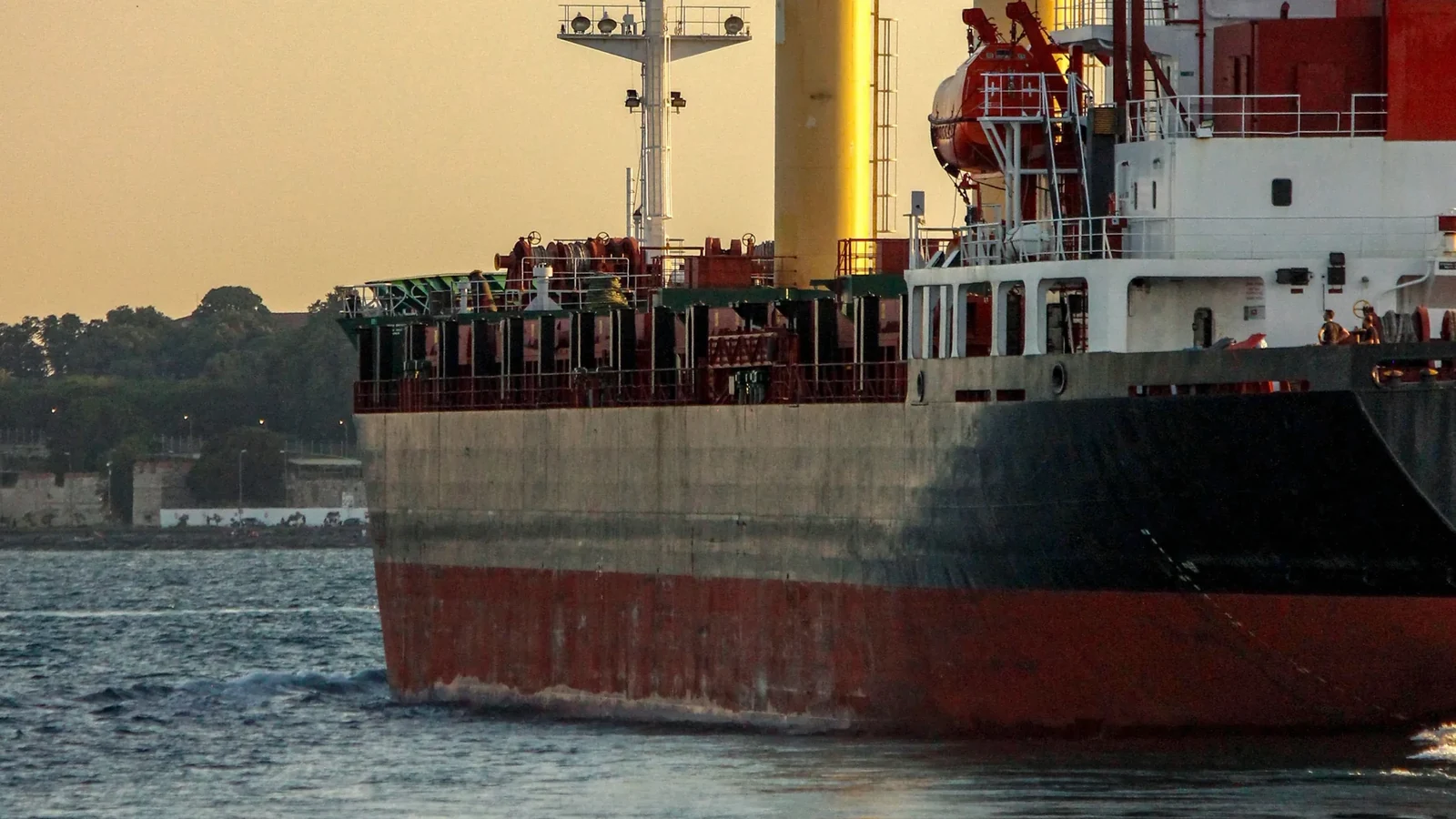
Ship–shore interfaces planned around real berth operations.

Power conversion, cable management, interlocking, protection and operating sequence are coordinated as one system.

Solution configuration

Configure shore-side, ship-side and control layers as one coordinated system.

The final package is defined from port grid conditions, vessel voltage and frequency, load demand, berth layout, cable route, transfer philosophy and class requirements.

01
Shore-side system

Convert, distribute and deliver grid power safely to the vessel connection point.

Power conversion

Frequency conversion and voltage matching

  • Grid interfaceIncoming switchgear, metering and protection are configured to the local grid and project capacity.
  • 50/60 Hz conversionStatic frequency converters match grid frequency to vessel demand where shore and ship frequencies differ.
  • LV/HV adaptationTransformers and distribution equipment can be included for project-specific low- or high-voltage supply.
Shore connection

Connection boxes and cable management around the berth

  • Socket / connection boxFixed or mobile connection points are selected around berth layout and vessel interface position.
  • Cable managementCable reels, cranes or mobile cable-management systems reduce manual handling and keep the operating area organised.
  • Berth flexibilityCable reach and interface location can be engineered for changing vessel mooring positions and different hull arrangements.
Shore control & protection

Automated sequencing, protection and remote supervision

  • PLC / HMIGuided or automated operation sequences display status, alarms, measurements and operating steps.
  • Protection & interlockingTypical functions include overcurrent, voltage/frequency, earth-fault, phase-sequence, emergency-stop and ship–shore interlocks as required.
  • Remote managementCommunication interfaces can support remote monitoring, energy metering, event records and upper-level management platforms.
02
Ship-side system

Receive shore power, manage the connection and transfer load to the vessel safely.

Receiving & distribution

Shore-power receiving interface to the vessel switchboard

  • Shore power boxProvides the onboard receiving point with switching, indication, metering and protection according to the project design.
  • Main switchboard interfaceThe shore connection is coordinated with the existing main switchboard, breakers, earthing philosophy and vessel protection system.
  • Transformer optionShip-side transformer or isolation equipment can be added where voltage adaptation or galvanic separation is required.
Cable handling

Safe storage, deployment and recovery of the ship–shore cable

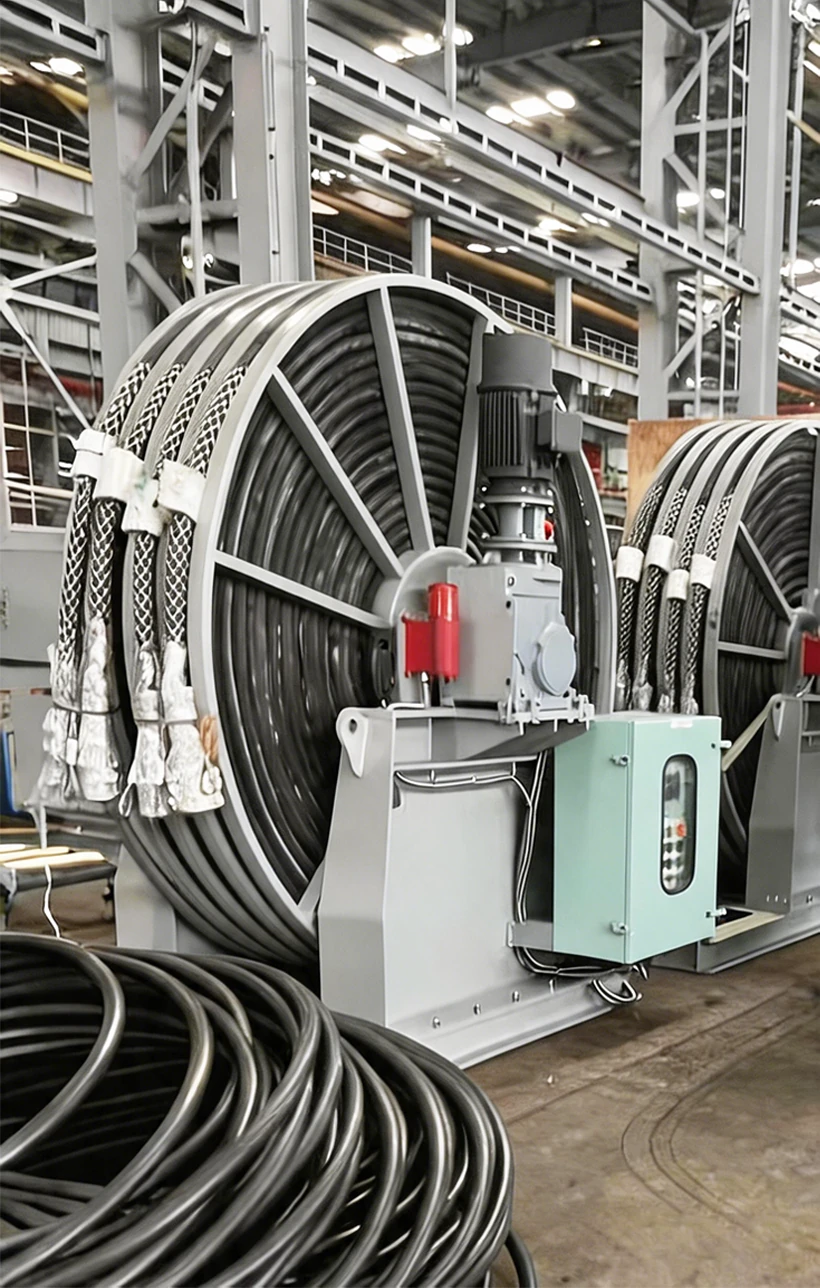
  • Cable winch / reelShip-mounted cable handling can be configured where the vessel carries the connection cable.
  • Plug & socket interfaceConnection hardware is selected according to voltage level, current rating, vessel type and applicable shore-connection standard.
  • Mechanical protectionCable routing, strain relief and handling logic are designed to reduce mechanical stress during berth operations.
Synchronising & transfer

Controlled transition between onboard generation and shore power

  • Synchronising checksVoltage, frequency, phase sequence and phase angle are checked before parallel or transfer operation when required.
  • Parallel / transfer logicThe system can be engineered for break-before-make or synchronised closed-transition strategies according to vessel requirements.
  • Load coordinationLoad sharing, capacity limits and operating permissions can be coordinated to support stable high-load berth operation.
Typical project options
LV / HV50 / 60 HzRetrofit / NewbuildIEC/IEEE 80005 seriesClass-aligned design
Final equipment, ratings, protection settings and certification scope are confirmed in the project technical agreement.
Shore power equipment

A complete equipment package for both shore-side and ship-side connection.

The system can be configured around berth conditions, cable handling requirements, vessel interfaces and class expectations, with coordinated equipment on both sides of the connection.

Shore-side equipment
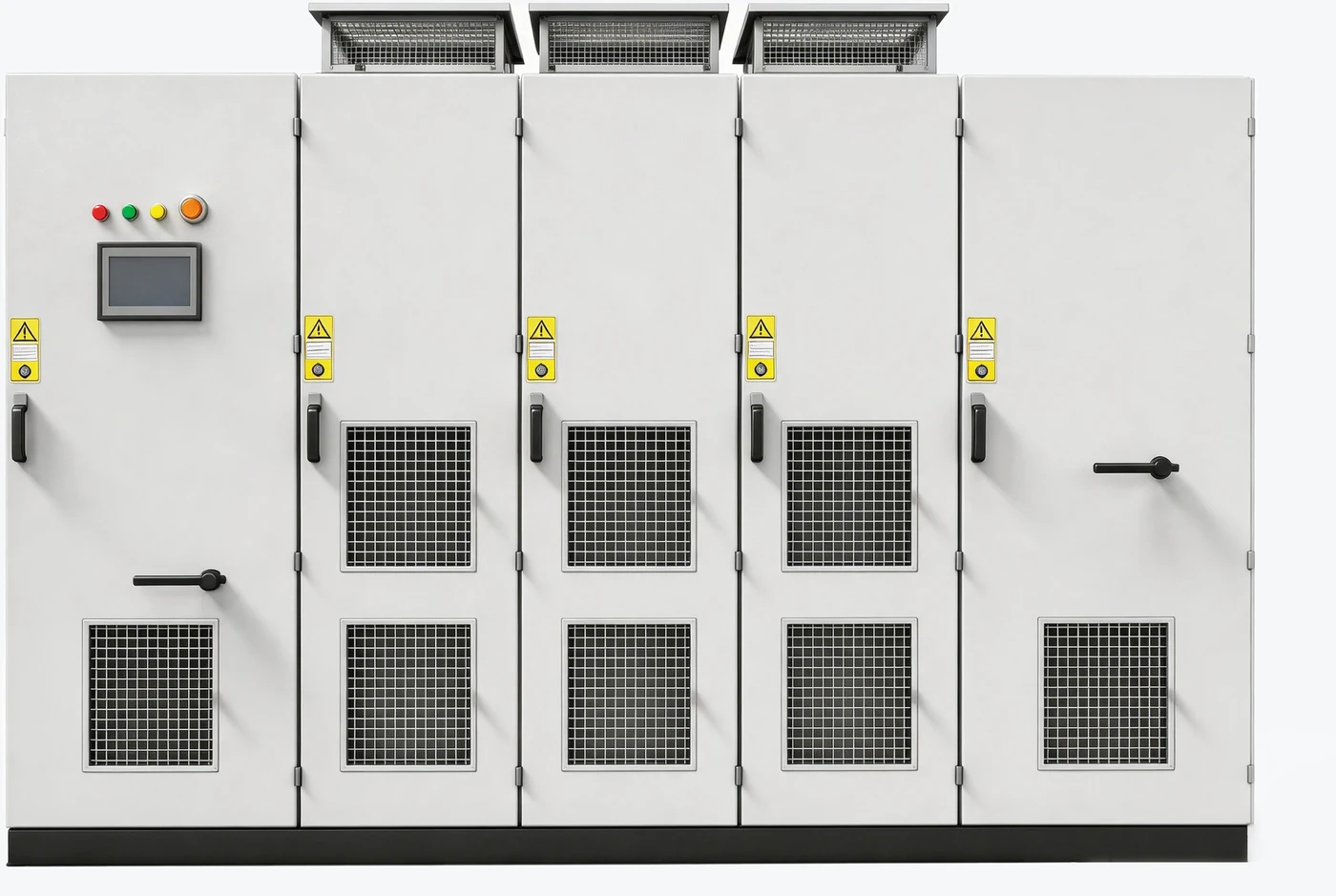
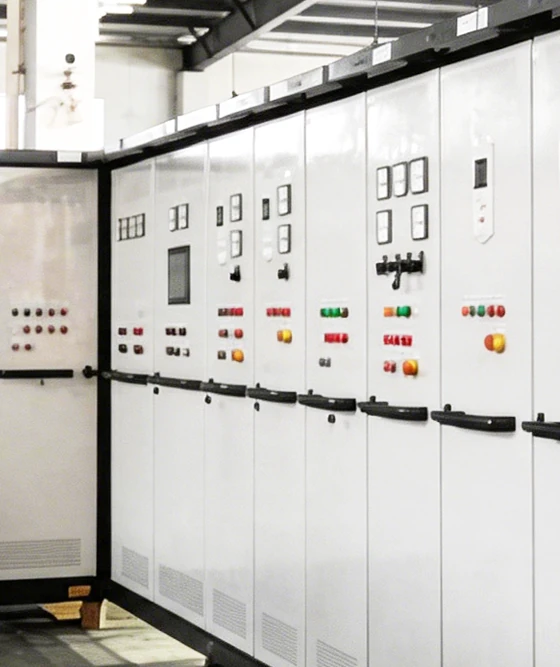
Frequency converter

Frequency Converter

Converts shore grid power to the voltage and frequency required by the vessel, while maintaining stable output and coordinated protection.

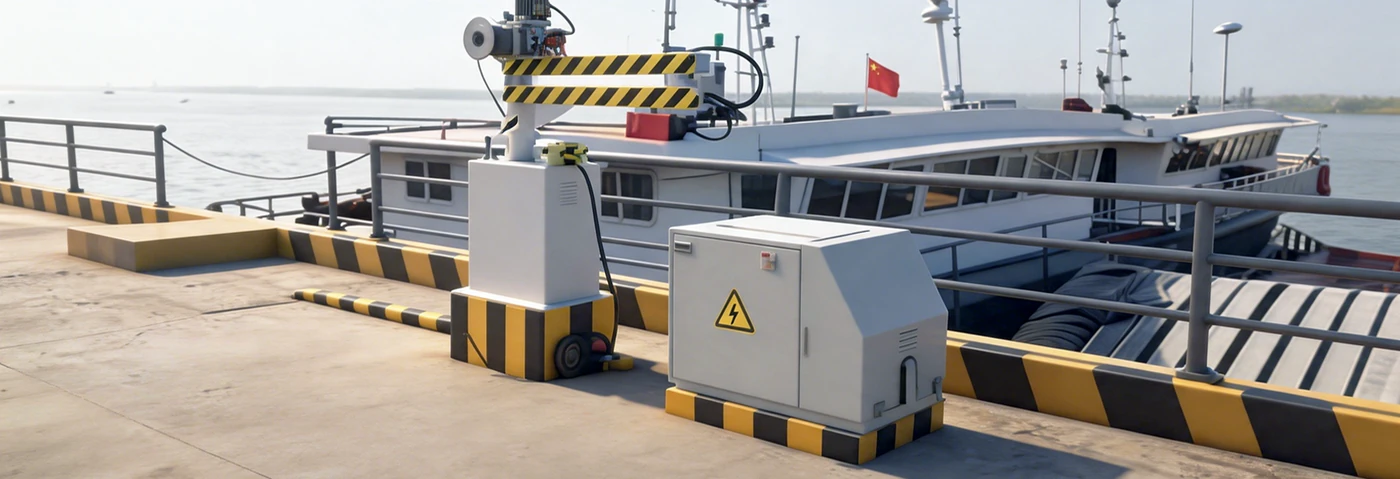
Socket box

Socket Box

Provides the protected shore-side connection point for power cables, helping organise cable routing and safe energisation at berth.

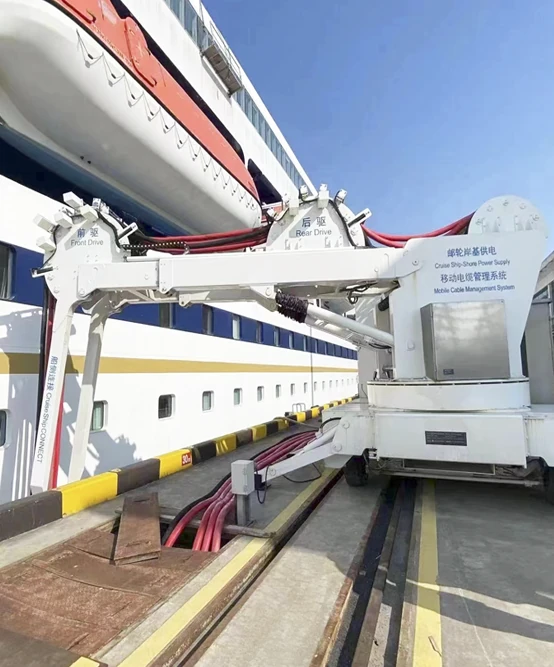
Cable reel crane

Cable Reel Crane

Supports cable storage, payout and recovery between berth and vessel, improving handling efficiency and reducing manual cable work.

Ship-side equipment
Cable winch

Cable Winch

Stores and manages the vessel-side cable set, enabling controlled deployment and recovery during connection and departure.

Shore power box

Shore Power Box

Receives incoming shore supply onboard and integrates switching, metering and protective functions before distribution to ship systems.

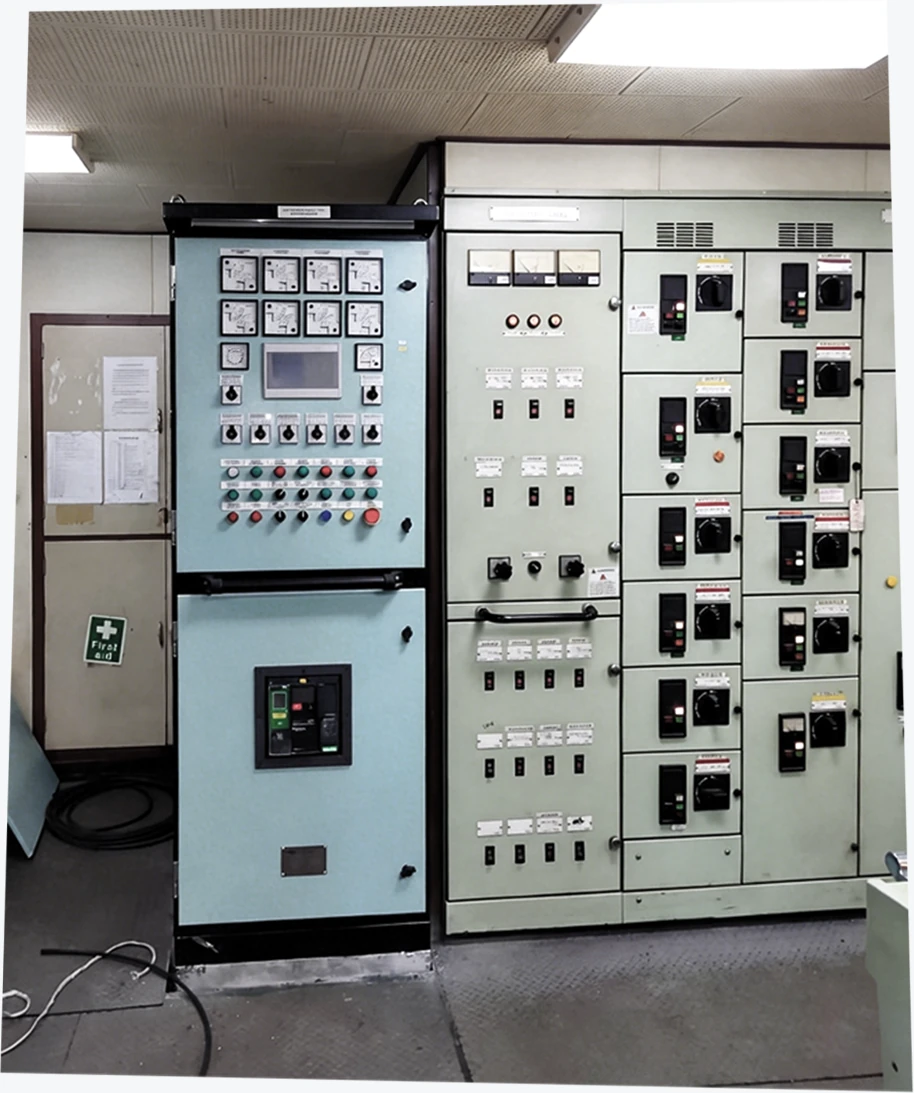
Synchronising switchboard

Synchronising Switchboard

Manages source changeover, synchronising and coordinated protection to support reliable transfer between onboard and shore power modes.

One-stop service flow

A structured path from early review to long-term support.

We combine survey, design, manufacturing, installation, documentation and after-sales support into one coordinated delivery process.

01

Consultation & project review

Collect vessel particulars, operating conditions and energy demand, then complete an initial scheme review to define the project baseline.

02

Onboard survey & feasibility check

Inspect installation space, piping routes, electrical conditions and construction feasibility so the design matches the real vessel environment.

03

Custom design & equipment manufacturing

Develop a class-aligned solution tailored to vessel type and route, confirm technical parameters, then execute standardised manufacturing under full quality control.

04

Integrated installation & commissioning

Provide turnkey installation or standardised guidance, covering equipment, engineering, cabling, valves, foundations and class submission support, followed by professional commissioning.

05

Documentation handover & lifecycle support

Deliver drawings, equipment documents, test reports, certificates, O&M manuals and spare-parts lists, with data visibility and responsive after-sales service backed by a 12-month warranty.

Discuss your vessel

Need a Marine Shore Power System solution?

Send the port voltage and frequency, vessel load, interface type, cable distance and whether synchronising or frequency conversion is required for an initial technical review.

Contact our team