Integrated Engineering Solutions

WindShield / Wind Deflector

Reduce aerodynamic drag on superstructure and deck cargo to lower sailing air resistance

Selected capability

WindShield / Wind Deflector

Reduce aerodynamic drag on superstructure and deck cargo to lower sailing air resistance

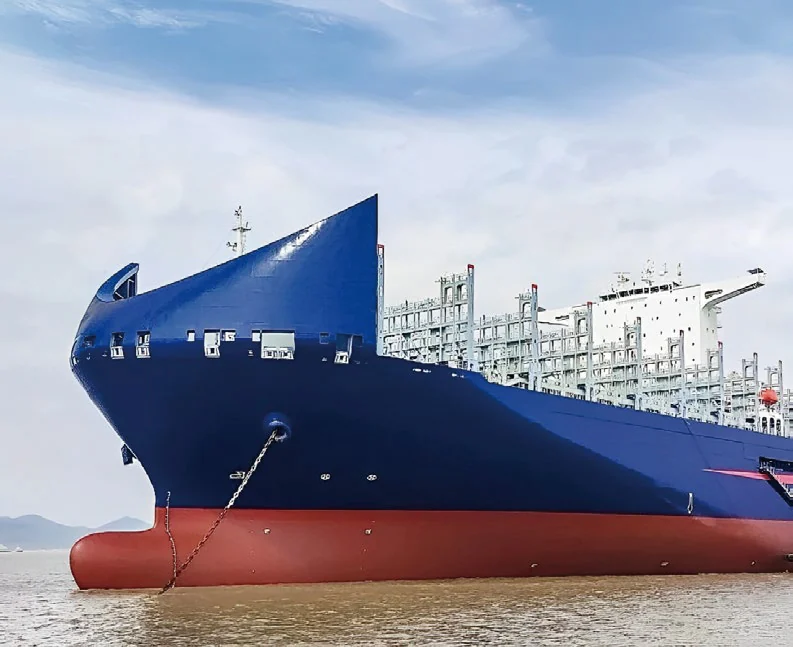
A WindShield/deflector targets vessels with large frontal area by shaping airflow around the forward deck/superstructure. The supplied reference states a 25–30% reduction in wind resistance; this is not the same as whole-vessel fuel saving. Actual fuel benefit must be evaluated from wind climate, speed, heading, deck arrangement and route statistics.

01The supplied reference states an indicative 25–30% wind-resistance reduction; it is not a direct fuel-saving percentage
02Suitable for assessment on vessels with large frontal area such as large container ships
03Reduce propulsion demand and emissions indirectly through lower aerodynamic drag
Discuss this project
WindShield / Wind Deflector
Windshield application reference image
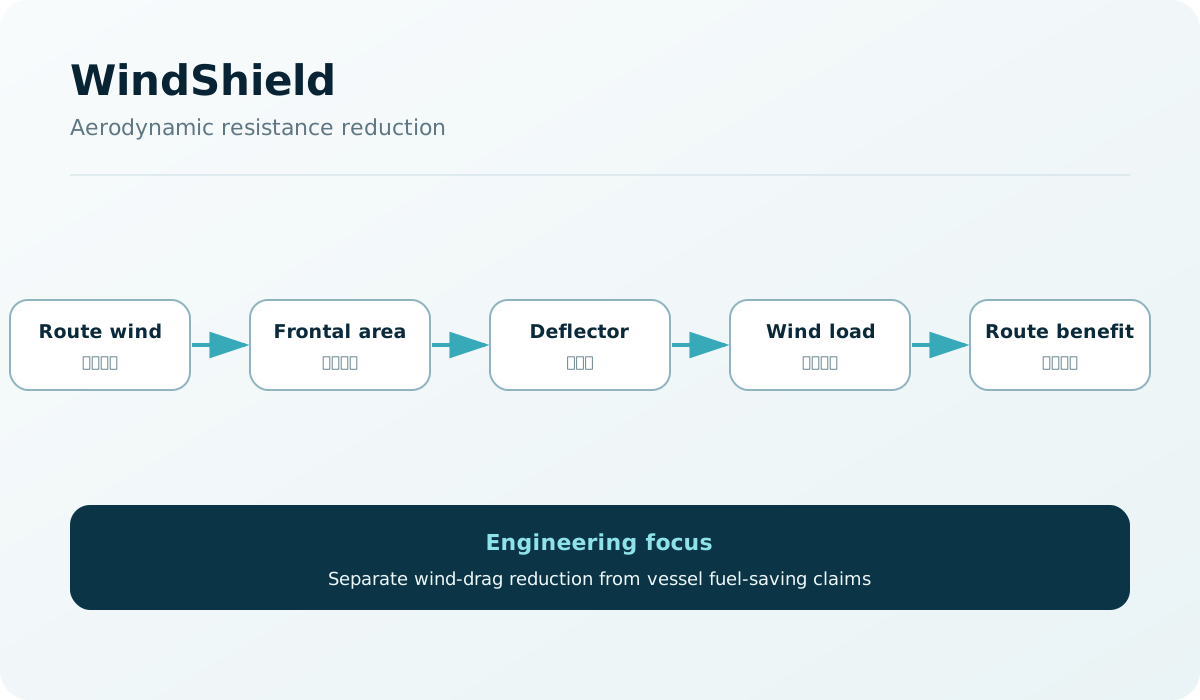
WindShield / Wind Deflector schematic
Technical principle / system relationship
System relationship

Make the interfaces clear before equipment selection.

This flow is a quick view of the system boundary. Final quantities, interfaces and configuration remain vessel- and project-specific.

01Wind field
02Frontal area
03Deflector
04Drag reduction
05Route benefit
01

Typical configuration & scope

  • Wind/route and frontal-area analysis
  • Aerodynamic deflector geometry design
  • Structural load and deck-interface design
  • Installation, visibility/operation interference and acceptance
02

Information required

  • Vessel GA and deck/container arrangement
  • Typical speed, route and wind-direction data
  • Available installation space and structural drawings
  • Cargo handling, visibility and deck-operation constraints
03

Engineering focus

  • State and verify wind-drag reduction separately from fuel benefit
  • Verify extreme wind loads, structural strength and fatigue
  • Do not obstruct bridge visibility, cargo gear or safety access
04

Standards & technical basis

  • Class structural review as applicable
  • Vessel-specific aerodynamic / route assessment

Applicable rules, certificates and approval scope are confirmed against vessel class, flag and contract requirements.

From data to delivery

One delivery logic, with engineering depth adapted to each capability.

  1. 01Define duty & constraints
  2. 02Engineering / selection / interfaces
  3. 03Manufacturing / sourcing / approvals
  4. 04Installation / commissioning / verification
  5. 05Handover / lifecycle support