Integrated Engineering Solutions

Propeller Boss Cap Fins (PBCF)

Recover hub-vortex energy and reduce rotational losses behind the propeller

Selected capability

Propeller Boss Cap Fins (PBCF)

Recover hub-vortex energy and reduce rotational losses behind the propeller

Boss-cap fins are installed on the propeller cap and phased to the blade wake to weaken the hub vortex. The device is mechanically simple, but fin count, phase, diameter and angle must still be matched to the propeller geometry and operating point.

01Weaken the hub vortex and recover part of rotational energy loss
02The supplied reference states an indicative 1–2% saving range for boss-cap fins; vessel-specific matching/verification is required
03Compact retrofit concept that can be co-optimised with duct/high-efficiency propeller
Discuss this project
Propeller Boss Cap Fins (PBCF)
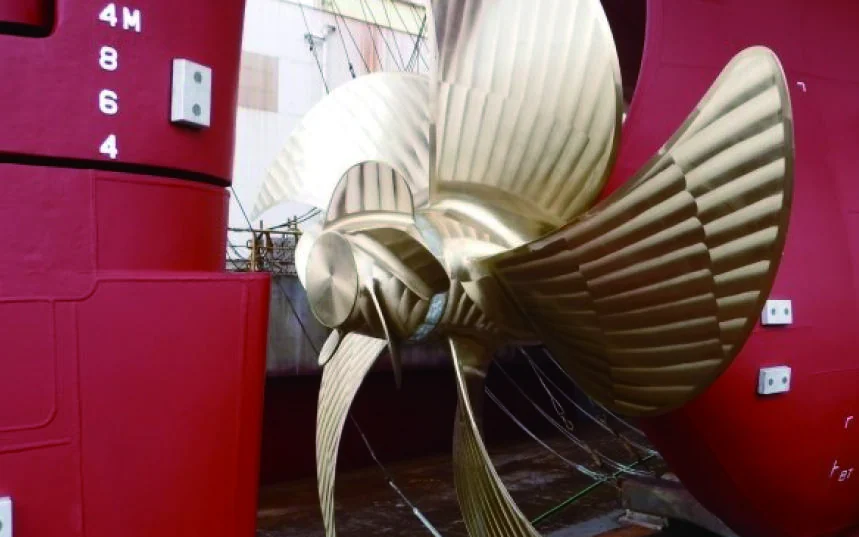
PBCF reference image
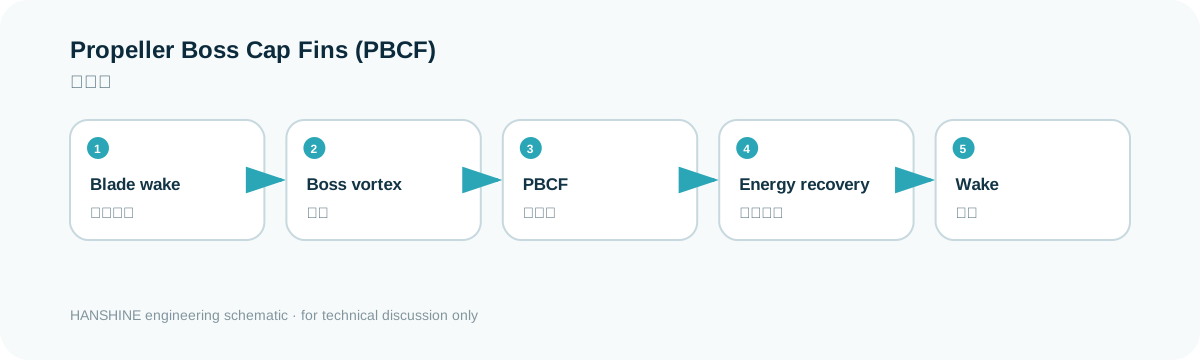
Propeller Boss Cap Fins (PBCF) schematic
Technical principle / system relationship
System relationship

Make the interfaces clear before equipment selection.

This flow is a quick view of the system boundary. Final quantities, interfaces and configuration remain vessel- and project-specific.

01Blade wake
02Boss vortex
03PBCF
04Energy recovery
05Wake
01

Typical configuration & scope

  • PBCF geometry matching
  • Mechanical cap interface
  • Manufacture and balance
  • Installation-clearance check
02

Information required

  • Complete propeller drawing
  • Blade count, diameter, pitch and rpm
  • Boss-cap construction and space
  • Typical engine operating points
03

Engineering focus

  • Fin phasing must match propeller geometry
  • Check weight, balance and fastening after retrofit
  • Assess benefits against actual propeller condition and duty profile
04

Standards & technical basis

  • Class approval as applicable

Applicable rules, certificates and approval scope are confirmed against vessel class, flag and contract requirements.

From data to delivery

One delivery logic, with engineering depth adapted to each capability.

  1. 01Define duty & constraints
  2. 02Engineering / selection / interfaces
  3. 03Manufacturing / sourcing / approvals
  4. 04Installation / commissioning / verification
  5. 05Handover / lifecycle support