Integrated Engineering Solutions

Waste Heat Recovery Power Generation System

Recover usable exhaust and thermal energy as electricity or useful heat

Selected capability

Waste Heat Recovery Power Generation System

Recover usable exhaust and thermal energy as electricity or useful heat

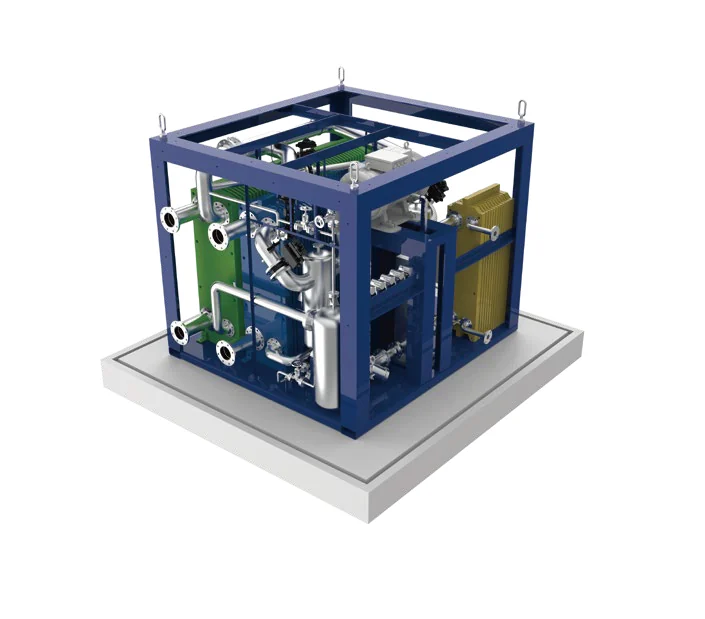
Assesses ORC and other waste-heat power-generation routes from engine heat grade, ship electrical demand, cooling conditions and available space. A typical ORC loop combines booster pump, evaporator, expander/turbine, condenser, working-fluid storage and filtration, with heat balance, cooling capacity, bypass and ship-grid limits treated as system constraints.

01The supplied ORC reference states an indicative 1–3% fuel-saving range; actual benefit must be calculated from route, engine loading and available heat
02Reduce auxiliary-generation demand at sea while recovering otherwise rejected heat
03Integrate at system level with jacket-water/HT/WHR circuits and the ship electrical network
Discuss this project
Waste Heat Recovery Power Generation System
ORC unit reference image
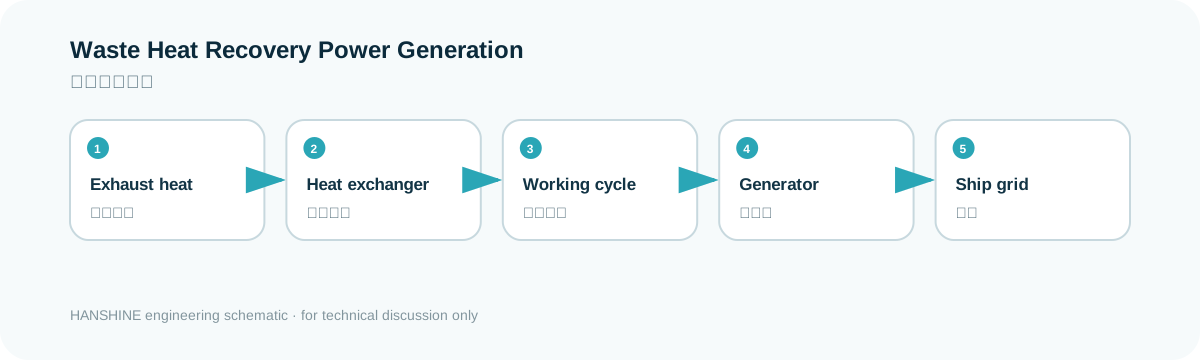
Waste Heat Recovery Power Generation System schematic
Technical principle / system relationship
System relationship

Make the interfaces clear before equipment selection.

This flow is a quick view of the system boundary. Final quantities, interfaces and configuration remain vessel- and project-specific.

01Heat source
02Evaporator
03Turbine
04Condenser
05Ship grid
01

Typical configuration & scope

  • Exhaust heat exchanger / steam generator
  • Expander/turbine or ORC module
  • Generator and grid connection
  • Bypass, control and safety interlocks
02

Information required

  • Main-engine model, MCR/NCR and exhaust data
  • Exhaust temperature/flow across load points
  • Ship electrical load profile
  • Space, cooling conditions and steam/heat demand
03

Engineering focus

  • Verify permissible engine back-pressure and heat balance
  • Address low-load and bypass operation
  • Include grid protection, blackout and fault-bypass philosophy
04

Standards & technical basis

  • Class machinery/electrical rules
  • IMO efficiency framework

Applicable rules, certificates and approval scope are confirmed against vessel class, flag and contract requirements.

From data to delivery

One delivery logic, with engineering depth adapted to each capability.

  1. 01Define duty & constraints
  2. 02Engineering / selection / interfaces
  3. 03Manufacturing / sourcing / approvals
  4. 04Installation / commissioning / verification
  5. 05Handover / lifecycle support