Marine Equipment & Systems

Cryogenic Valves for Liquefied Gas

Control heat leak, sealing and material-embrittlement risk in LNG and other cryogenic services

Selected capability

Cryogenic Valves for Liquefied Gas

Control heat leak, sealing and material-embrittlement risk in LNG and other cryogenic services

Cryogenic valves are selected around medium, minimum design temperature, pressure class and leakage requirement, with suitable material, extended bonnet, seat sealing and actuation. Marine applications also consider fire/Ex requirements, ESD logic and low-temperature testing.

01Reduce exposure of stem packing to extreme low temperature
02Support pneumatic/electric actuation and ESD shutdown
03Select seat and material to medium and leakage class
Discuss this project
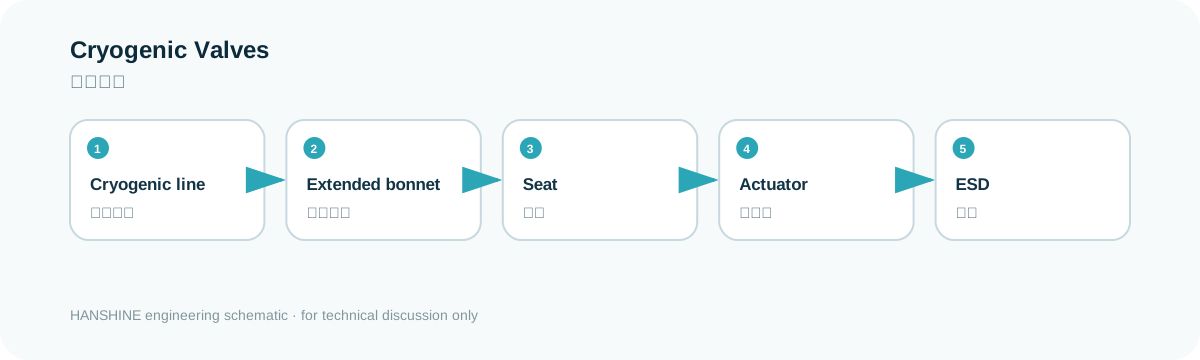
Cryogenic Valves for Liquefied Gas schematic
Technical principle / system relationship
System relationship

Make the interfaces clear before equipment selection.

This flow is a quick view of the system boundary. Final quantities, interfaces and configuration remain vessel- and project-specific.

01Cryogenic line
02Extended bonnet
03Seat
04Actuator
05ESD
01

Typical configuration & scope

  • Globe, ball, butterfly and check valves
  • Extended-bonnet cryogenic stem construction
  • Pneumatic/electric actuator and limit switches
  • Cryogenic, leakage and pressure testing
02

Information required

  • Medium and min/max design temperature
  • Design pressure, size and connection standard
  • Valve type, leakage class and flow direction
  • Ex, ESD and class requirements
03

Engineering focus

  • Address material toughness and thermal contraction at design stage
  • Allow actuator torque margin for cold service
  • Include cryogenic test records and flow orientation in handover documents
04

Standards & technical basis

  • LNG/cryogenic project specifications
  • Class and valve standards as specified

Applicable rules, certificates and approval scope are confirmed against vessel class, flag and contract requirements.

From data to delivery

One delivery logic, with engineering depth adapted to each capability.

  1. 01Define duty & constraints
  2. 02Engineering / selection / interfaces
  3. 03Manufacturing / sourcing / approvals
  4. 04Installation / commissioning / verification
  5. 05Handover / lifecycle support