Integrated Engineering Solutions

WindWing & Rotor Sail

Use ambient wind as auxiliary propulsion to reduce main-engine propulsion demand

Selected capability

WindWing & Rotor Sail

Use ambient wind as auxiliary propulsion to reduce main-engine propulsion demand

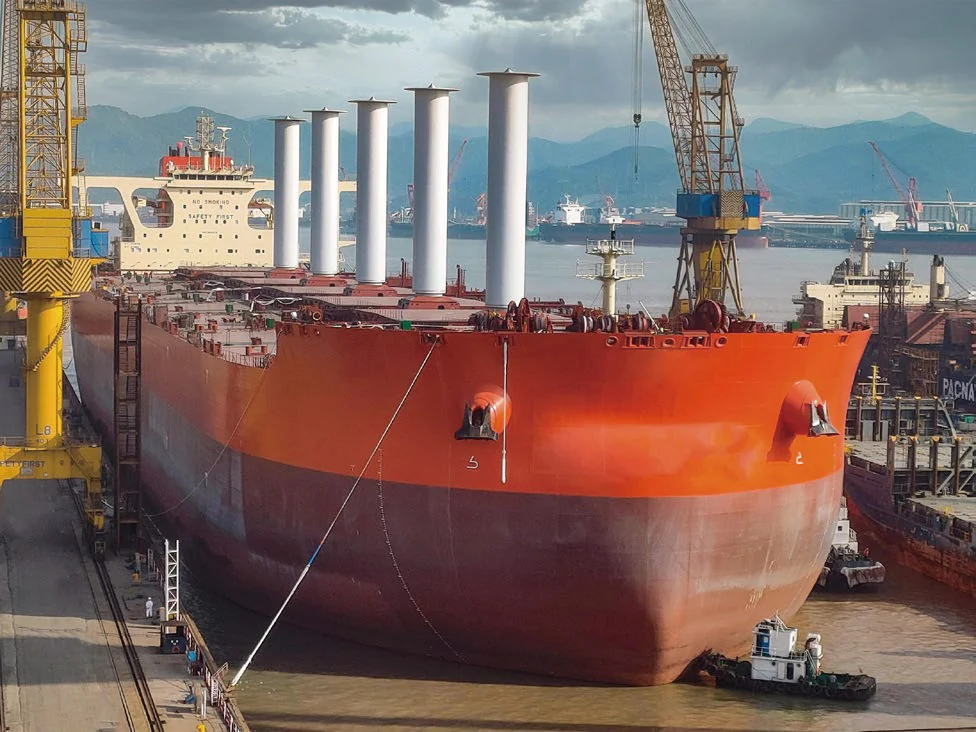
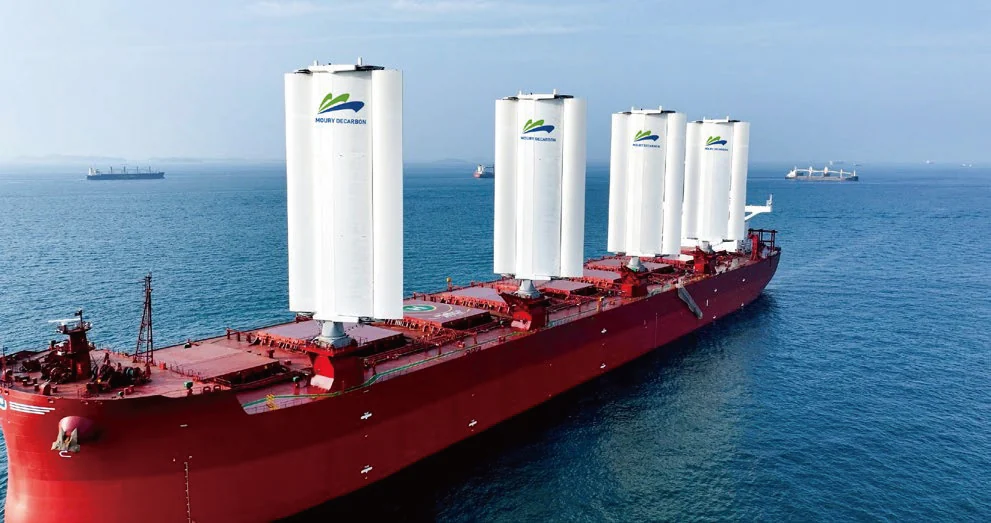
Wind-assisted propulsion can use WindWing-type aerodynamic sails or Rotor Sails. WindWing systems use controllable aerodynamic surfaces, while Rotor Sails use the Magnus effect of rotating cylinders. Selection must be based on route wind climate, ship speed, deck space, stability, structure and operational interference.

01The supplied reference gives an indicative 5–30% saving range for both WindWing and Rotor Sail; actual value is highly dependent on vessel, route winds and installed quantity
02The WindWing reference states an indicative 3–5 year payback; project economics must be recalculated for the actual vessel
03Rotor Sail retrofit is mainly deck-based, but structure, stability, power supply and operational interference still require verification
Discuss this project
WindWingWindWing
Rotor SailRotor Sail
Wind-assisted propulsion reference images
WindWing & Rotor Sail schematic
Technical principle / system relationship
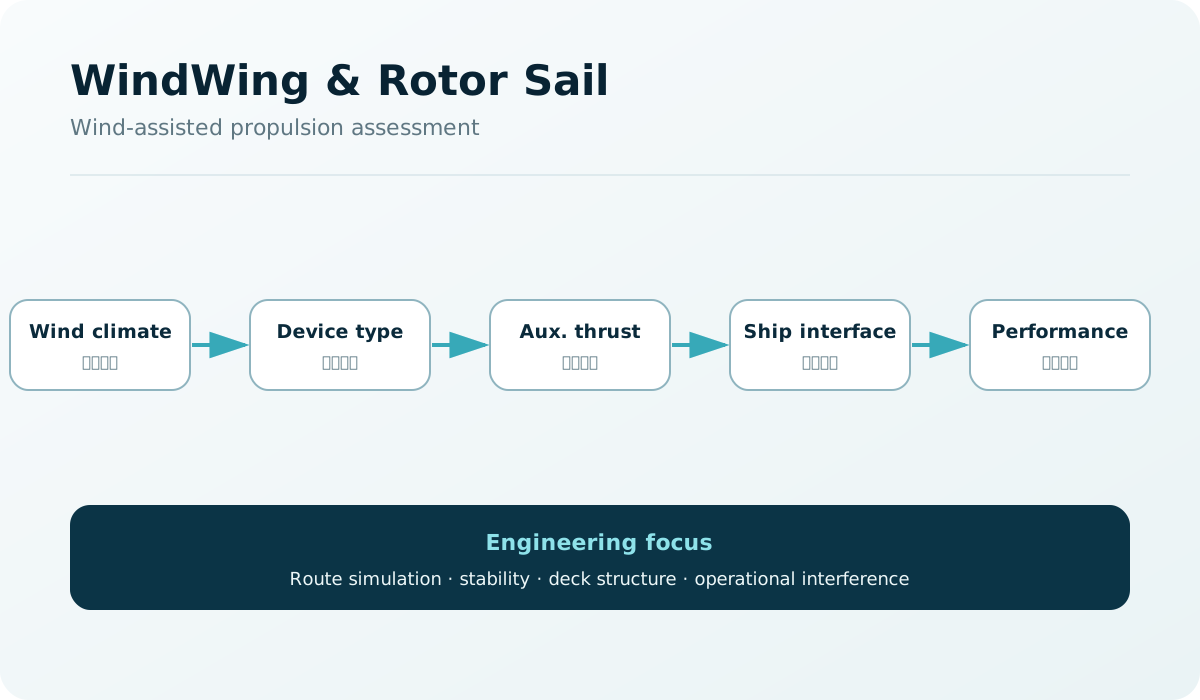
System relationship

Make the interfaces clear before equipment selection.

This flow is a quick view of the system boundary. Final quantities, interfaces and configuration remain vessel- and project-specific.

01Route wind
02Wind device
03Thrust component
04Engine unloading
05Performance
01

Typical configuration & scope

  • Route wind-resource and performance simulation
  • WindWing or Rotor Sail type/quantity selection
  • Deck foundation, structure and stability verification
  • Controls, power, stow/stop and safety logic
02

Information required

  • GA, deck arrangement and stability data
  • Route wind-speed/direction statistics and speed profile
  • Main-engine propulsion power and fuel data
  • Deck operations, crane/hatch-cover and structural constraints
03

Engineering focus

  • Do not apply promotional saving percentages without route-wind assessment
  • Verify stability, structural loads and extreme-weather safe modes
  • Validate interference with deck operations, cargo gear and port operations early
04

Standards & technical basis

  • Class structural/stability review as applicable
  • Vessel-specific wind-assist performance assessment

Applicable rules, certificates and approval scope are confirmed against vessel class, flag and contract requirements.

From data to delivery

One delivery logic, with engineering depth adapted to each capability.

  1. 01Define duty & constraints
  2. 02Engineering / selection / interfaces
  3. 03Manufacturing / sourcing / approvals
  4. 04Installation / commissioning / verification
  5. 05Handover / lifecycle support